
 Yazar


When Gareth Evans swept across the action scene with The Raid films, he planted himself firmly among the summits of action cinema. The Raid: Redemption and The Raid 2 — from stunt performers who gave everything physically to gravity-defying sequences, from masterfully deployed practical effects to raw and pure fight choreography — cracked open the door to a new era. We were looking squarely at a new, modern version of the impact John Woo had created in the eighties. The Furious is an action storm that sets out to generate the same impact as The Raid, promising its audience a great deal.
The most important reason you can trust Kenji Tanigaki — whose directing history is not particularly inspiring — is his decades of experience as an action director across dozens of films. While he had failed to make an impact with any of his previous directorial outings, this time he draws strength from the screenplay written by the quartet of Tin Shu Mak, Zhilong Lei, Kwan-Sin Shum, and Frank Hui and delivers a remarkable directing performance. Twilight of the Warriors: Walled In — the best project on which he choreographed action — had already sketched a portrait of an artist who knows what he is capable of, but had simply not yet had the chance to showcase his directorial skills. Those days are behind him now. Because The Furious is pure, unadulterated, unfiltered action mania in every sense.
The Power of Using Simple Storytelling in an Action Gale
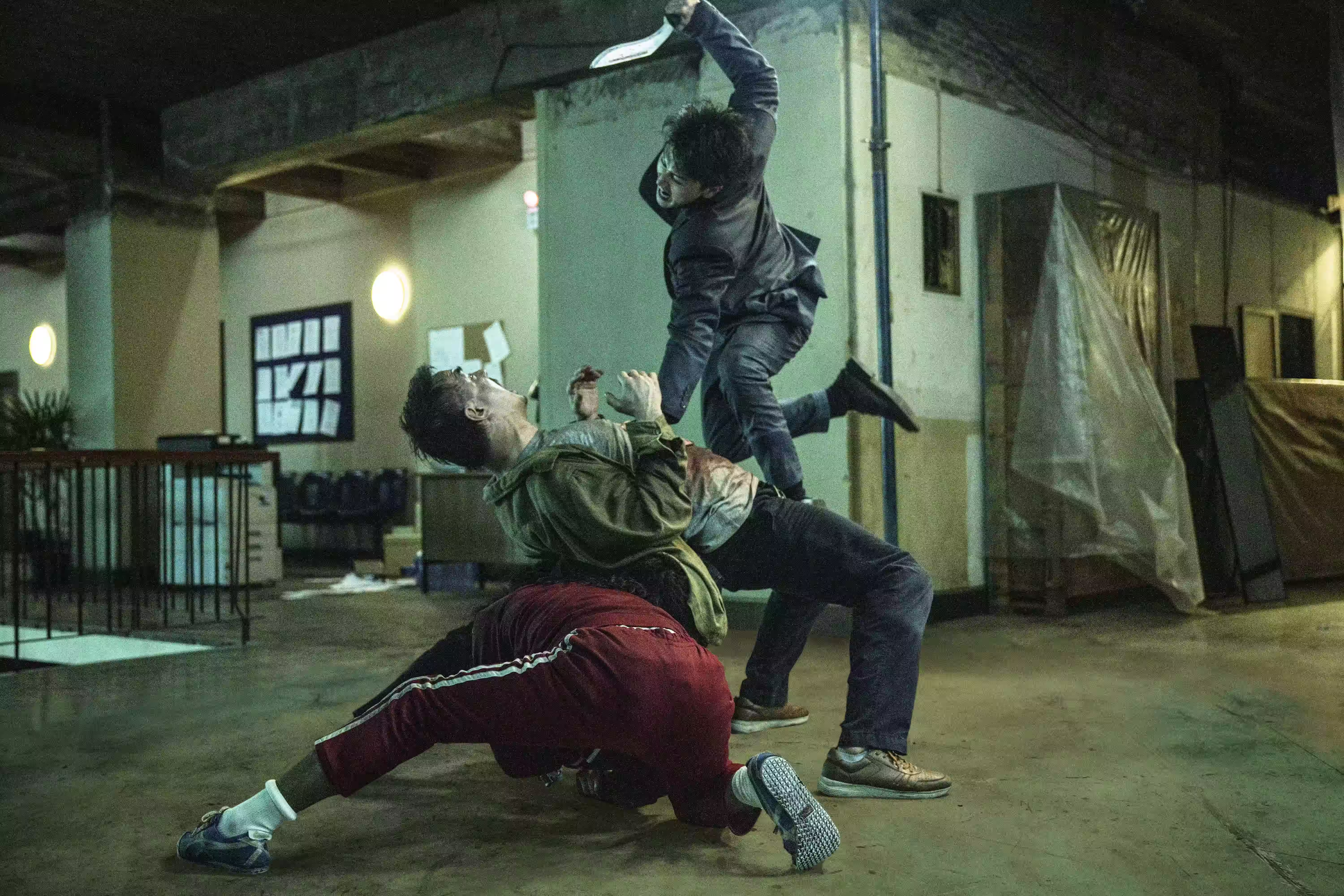
Are you a devotee of raw action? Do you believe that a simple plotline — the kind lying at the heart of a martial arts story — is enough? Then lean back; because you have before you a film that delivers its narrative without unnecessary embellishment, while saturating you with excitement and kung fu. You are about to step into a revenge-fueled adventure in an anonymous, impoverished, and menacing city in Southeast Asia. Our protagonist Wang Wei receives no help from a corrupt police force after his daughter is abducted by a criminal syndicate. He therefore sets off in pursuit of revenge, determined to find her on his own. His sole ally is Navin, a journalist whose wife has mysteriously disappeared. This unlikely duo, burning with furious revenge, begins fighting mercilessly against their enemies with martial arts pushed to their limits.
This alliance lights the fuse that transforms a simple plot into a magnificent cinematic display. The story’s plainness is not the film’s weakness; on the contrary, it becomes its greatest asset, multiplying the emotional weight behind every fight, every broken bone. Universal themes — the absolute evil of child trafficking and the truth that a father can set the world ablaze for his child — speak directly to the audience’s empathy and hunger for justice without entering into complex philosophical debate.
Thanks to this alliance we see precisely how a simple plot can be turned into a genuine display of force. Within that bare story we hear the sound of every breaking bone and — however clichéd — we witness a father’s capacity to burn the world for his child. At this point the film, rather than straining to create a philosophical subtext, prefers to stay within simple but universal territory by appealing to the viewer’s empathy and hunger for justice. The Furious, knowing how to use this mode of storytelling to its advantage, makes the best possible choice by refusing to drive events into chaos within an abundance of action.
Choreographies That Reject Logic and Serve Only the Art of Action
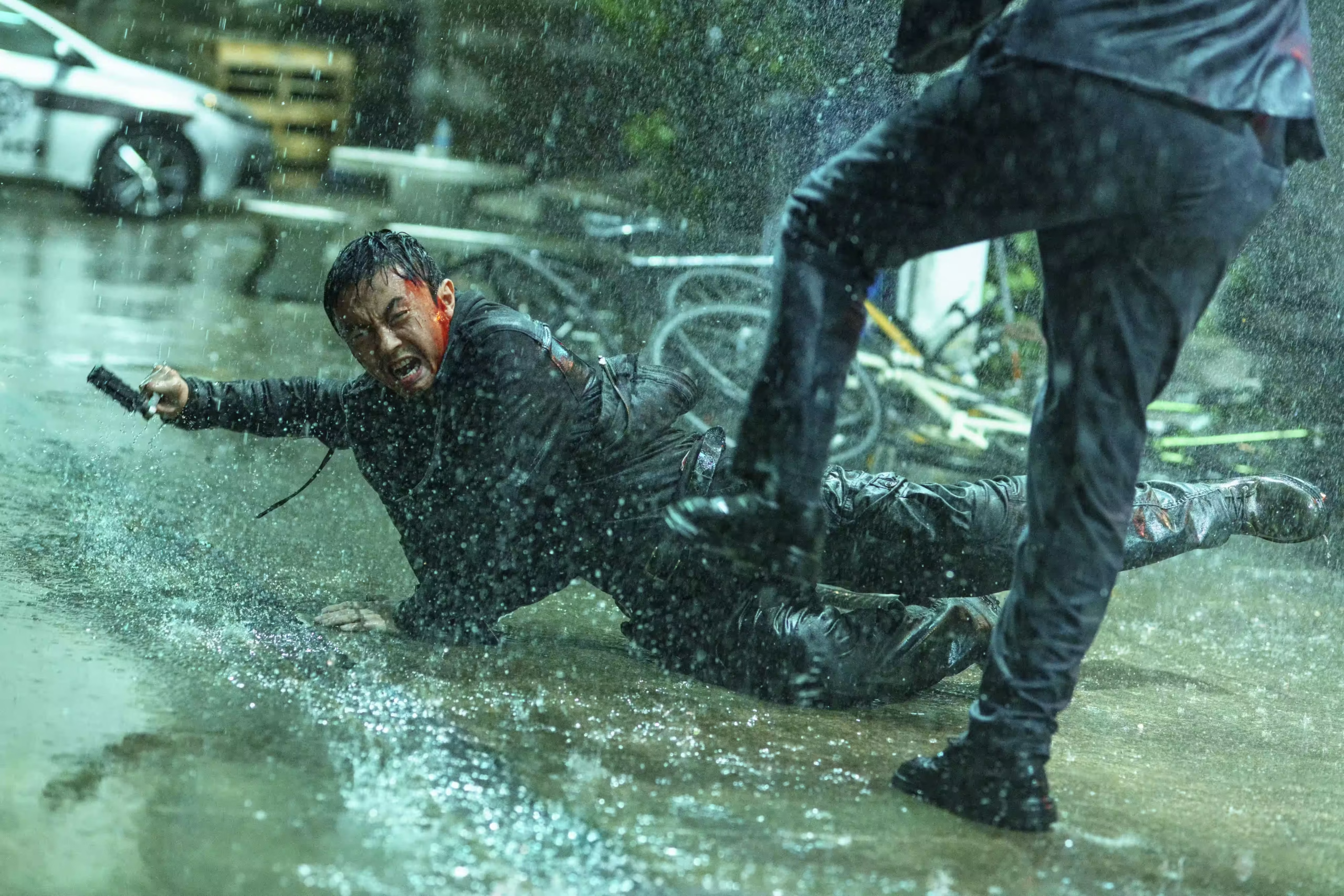
A product of the combined genius of Kensuke Sonomura and Kenji Tanigaki, The Furious strikes a posture at odds with human anatomy and the laws of physics. There is only savagery and blood delicately embedded within martial arts. One thing must be firmly understood before entering the world this film creates: if you are breathing, you will fight, and if you are going to fight, you will know that it is as precious as breathing. John Woo once said in an interview, “My action scenes are my way of showing the deepest human nature and passion in my characters’ hearts.” The core structure of this film is built entirely on that idea.
The greatest dividend of this choice is that we don’t even question a character who plunges from several floors onto a pile of bicycles and simply gets back up as if nothing happened. In fact, when he rises and starts punching his opponent, we fill with even more adrenaline. One thing worth noting here: while this absurdity works within this film, it obviously doesn’t suit every film. Sisu: Road to Revenge, released not long ago, is the best example of that. While building the film’s universe, world construction, and characters, action that doesn’t fit the space created is incredibly jarring. Therefore, where The Furious is quite convincing, Sisu: Road to Revenge was an outright disaster.
Returning to the film’s content, the biggest reason we don’t mind characters moving as if in a superhero film lies in the solid construction of the dramatic framework from the outset. We see with absolute clarity: corrupt justice, human trafficking, child abuse, underground gangs, and the dark paths the wealthy pursue to compound their fortunes. In this way you surrender entirely to the endless battles in the treacherous streets of Southeast Asia.
East Asia’s Giants Face to Face
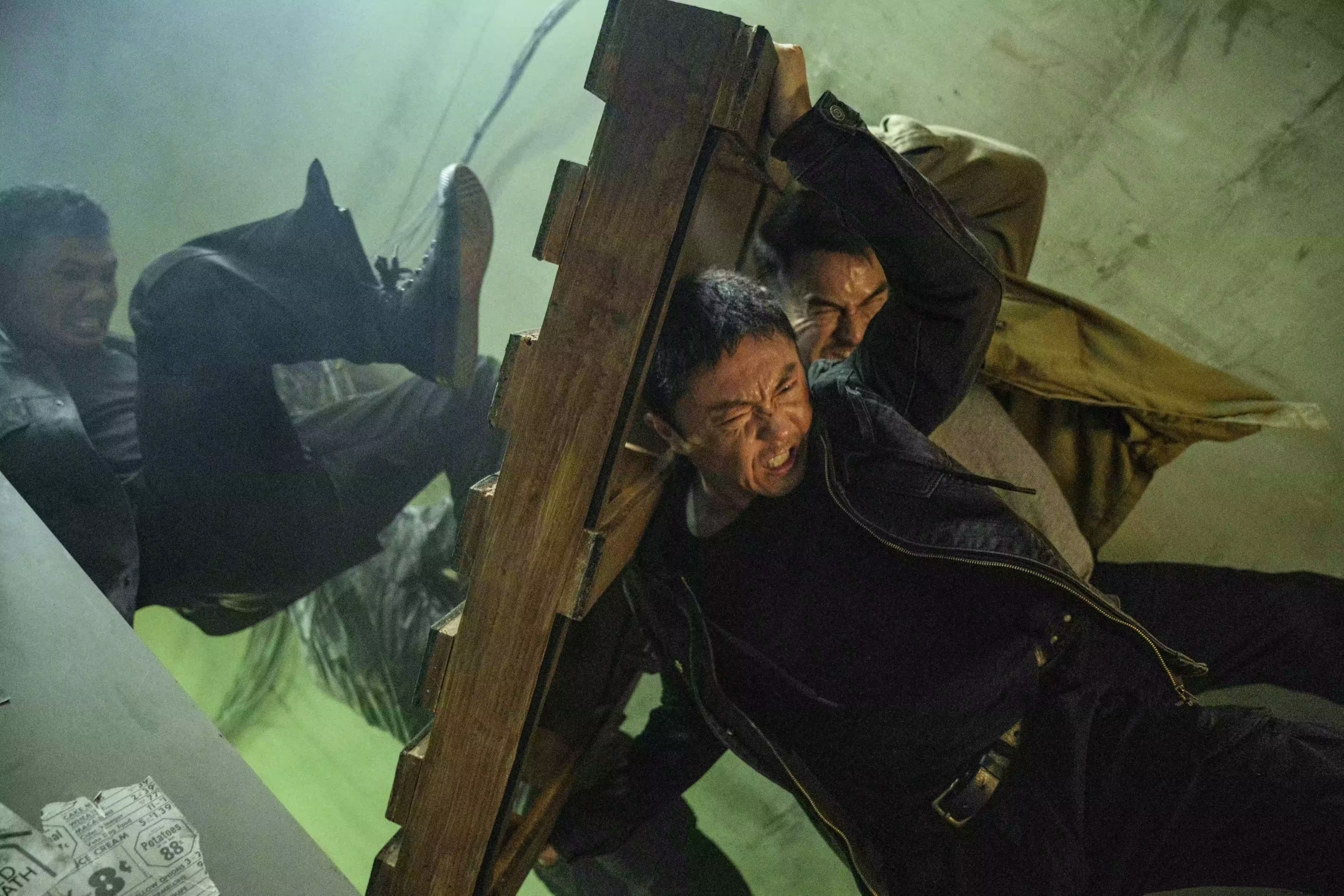
In the action sequences director Tanigaki has designed, you feel as if you have been invited into the middle of a dance performance. From the punches the characters throw to the kicks they absorb, from hard-object blows to the head to breaking bones, you touch every note in the musical of that dance. Xie Miao, one of the most masterful figures in traditional wushu, brings Wang Wei to life; the character fights with movements that are nearly millimetric, supremely precise, and incredibly controlled. On the road he takes to save his daughter, he never concedes an inch of his immaculate style and discipline.
Against him, Joe Taslim brings Navin to life with extraordinary charisma and a perpetual cigarette, arriving almost as a detective figure. Navin occupies a far more linear position, because his style rests entirely on a street tradition. Aggressive, physical, raw, and possessed of a strength that grows from hatred. We witness the personal score of a man from whom the most precious thing in his life has been taken, who has nothing left to lose and continues searching for his wife on the slimmest thread of hope.
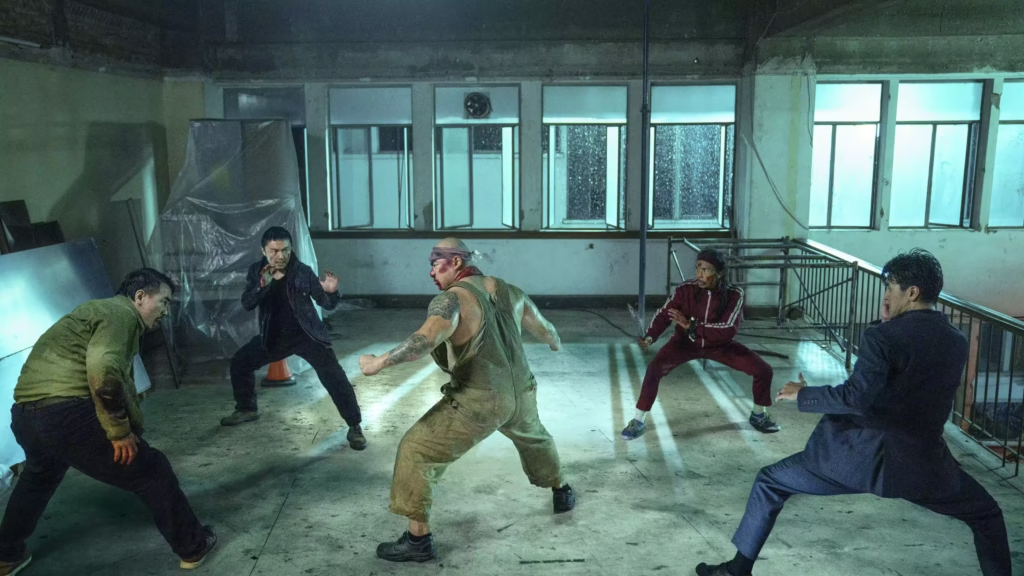
Thanks to these two different schools converging around a single energy, the moments of confrontation with the other martial arts styles in the enemy ranks reach an epic dimension. Especially the presence of Yayan Ruhian — a star of Indonesian cinema whom most know from The Raid series — and Joey Iwanaga, one of the leading names of Japanese martial arts, elevates every scene they appear in to an entirely different plane. Ruhian, appearing with his arrows and bow, co-signs mind-boggling sequences in every moment he shares with Navin, while we watch events unfold in astonished disbelief. And once Iwanaga — who looks like a polite and handsome young businessman but may be the film’s darkest character — undergoes his transformation in the finale, you earn an invitation to pure madness, to the highest echelon of martial arts.
Visual Aesthetics Almost Reminiscent of Animation and Pure Cinema
The Furious has a structure that in traditional terms echoes its predecessors, yet it is a film that knows how to push boundaries and succeeds in modernizing its content and technique. In its world there is no bureaucracy, no mythology, no rules; the film evades every trap that would break its tempo or lead it into the mistake of taking itself more seriously than it is. Choreographically the line pursued is nearly chaotic, while the camera is positioned to let us see every skill of the fighters. Though the abundance of acrobatic fights sometimes gives the viewer no room to breathe, we adapt through a visual aesthetic that, almost reminiscent of animation, is relentlessly kinetic and presents its subjects battered and drenched in blood and sweat.
The film’s aesthetic vision lies in losing nothing to its reverence for martial arts culture within modernity. In the nature of the claustrophobic and merciless fight sequences, it is nearly impossible not to catch echoes of Bruce Lee. You can find references to The Big Boss in particular. The Big Boss paved the way for leaving behind traditional, ponderous Far Eastern fighting and foregrounded speed, realism, and the individual fighting philosophy known as Jeet Kune Do. The Furious carries this understanding into contemporary cinema under the most fitting conditions.
On the other hand, the resort to melodramatic elements outside the action sequences and the inclusion of ear-gratingly artificial English dialogue do create some problems. These rarely interrupt the flow of the story but never cast a shadow over the film’s overall structure. Some films are said to be experienced, not described, and The Furious is exactly that; you need to go and see this pure cinema experience. Whether a sequel comes, whether it attains the status of a modern classic, we cannot say — but even with its flaws, we have before us an extraordinarily entertaining film. “If you cannot apply technique, you cannot express it,” says Bruce Lee. The Furious is ready to present you with every technique it employs and transmit it as a form of spectacle.
To read more articles by Ferit Doğan, click here.
Follow us on Youtube, X and Instagram for more.




Yorumlar