
 Yazar


If an old neighbor of yours returned to the village properly after the war, would suspicion still stir within you? Probably not. Especially if the neighbor in question proved, the moment they reached the village, that they owned land by showing their papers. They are greeted by barren land, a dilapidated house, an animal-less barn. Considering a life spent in struggle on the battlefields, they know that establishing a new order in the village will take a few months at most. Meanwhile, the voice-over tells us that the character knows nothing of giving up. Surviving despite the scar on their face points to their resilience. They carry, around their neck, the bullet that pierced their face as a kind of reminder.
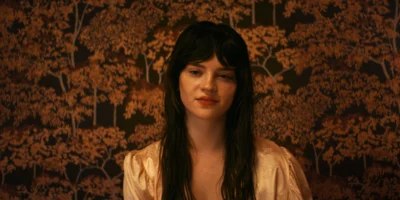
Their cold, expressionless face strives to cover the truth the audience inwardly knows: their feminine softness. They urinate standing up, rush to heavy labor like the others. They strive to live up to the title of master through their behavior. At the same time, the villagers gradually expect more. They soon understand they won’t be accepted without marrying, procreating, founding a family. I won’t even count the profitable deals they must make to look after their workers and expand their lands. Yet the truth cannot stay hidden for long. The tiny stranger who struts about in trousers draws step by step closer to the price of the freedom they borrowed.
Markus Schleinzer, in his third feature, Rose, traces an event that took place after the Thirty Years’ War. The black-and-white film was met with acclaim when it premiered at the 76th Berlin Film Festival. While Sandra Hüller received the Best Actor Award, talented performers like Caro Braun also drew attention with their debut performances. Making its Turkey premiere as part of the 45th Istanbul Film Festival and competing for the Golden Tulip, Rose won the Best Screenplay Award. Rose, whose rights belong to MUBI, is expected to reach audiences this year.
This article may contain spoilers about the film Rose.

A Marriage of Convenience
In every era of history, wars necessitate the rebuilding of life. The Thirty Years’ War, which completely changed the face of Europe, caused destruction unseen until that day. When the days in which civilians lived under threat for years and soldiers fought on the front at the cost of their lives came to an end, an enormous void remained. Life had to be restructured; water had to flow and find its way. Just as women were kept outside every social sphere, they were admitted to the battlefields only to meet vital needs such as cooking. So when they wanted to fight, they hid their identities and, by behaving like men, turned into someone they were not.
Why or how the main character who gives Rose its name joined the war is not the subject of the narrative. Apart from surviving despite fighting heroically and being wounded, very little information matters. What makes them respectable in people’s eyes and what creates disgust is the same scar. With a body that stays frail beside the village’s other men, they awaken the soil. Just as a woman might, they bring the space they live in to life. They shoot a bear, they lead their workers.
Before long, the need for water required for agriculture begins the process that leads them to marriage. The voice-over prepares the viewer for what will happen. In the scene where Rose meets their future spouse Suzanna, they stay silent even though they sense the magnitude of the prices they might pay for freedom. Suzanna, too, is quiet, seeming content with her fate as the eldest of five sisters. The marriage that will transform both characters begins to transform from the moment their oxcart gets stuck in the mud on the way home. The camera watching them from afar shows that both characters, whose movements resemble each other, are women, and that there is no difference between them.

When Society’s Expectations Shape Reality
Rose knows how cautiously they must live. They go to the forest to bathe, sleep in a hidden compartment of the house. They keep their body away from other eyes. So much so that they even push away the woman they married, saying they want to protect her innocence as long as possible. Contrary to common assumption, it is they who must protect their own innocence in the marriage. They fear what might happen to them if it is understood that they have taken a man’s place. Not long after the solution they found in their own way, the first reaction comes. Their father-in-law delivers a speech about how the master he married his daughter to has not fulfilled his sexual duty. But this necessity, expressed mixed with threat, becomes the only key to Rose’s reputation.
The viewer cannot see how the act takes place. With a bleakness fitting of the Middle Ages, the sexual union happens in the dark. Rose asks Suzanna to turn her back, and the details are hidden from the viewer just as they are from Suzanna. This is followed by the news of a pregnancy that comes soon after. Although Rose wonders whose the baby is, they cannot ask, so as not to expose themselves. The film continues on its way, leaving the question mark there. The music, which heightens the tension and at times gets ahead of the narrative, combines with the guidance of the narrator’s voice. The intangible tension gradually rises.
After a certain incident, Suzanna approaches Rose’s body. When she pulls down their trousers, the genitalia she finds before her create shock and disappointment. The deceived Suzanna is forced to decide what to do with the baby in her arms. Rose says one of the film’s most striking lines after this incident: “If we make up a story and I leave, your father will marry you off to someone else. Just as he married you to me.” This line forms the backbone of Rose.

Let’s Show Who’s the Master
In such an era, when the man is capable of everything and the woman owns nothing but her family, two women staying together is the only way for them to be free. Rose taking the identity of a man they knew during the war brings Rose to the freedom they dreamed of. Freedom acquired through a man spreads to Suzanna. Rose — who has seen war, does heavy labor and must socially maintain the male role — feels an obvious pressure from the moment Suzanna learns the truth. Moreover, another villager who, like Suzanna, forms an idea about Rose’s identity poses an open threat. He refuses to work, saying, “The master is no master.” The pressure Rose feels and the truth spreading from ear to ear bring both characters closer to their shared end.
One night the villagers who show up at their door ask Rose to pull down their trousers. Although they put forward arguments we might today call nonsense, the towering Rose once again creates an effect with their eloquence. Their words — which bring to my mind Cyrano de Bergerac‘s “No, thank you” tirade — stop the crowd for that night, yet make the pair feel they are at the end of the road. So much so that when the crowd appears at the door with a prosecutor, just as Rose wished, they realize they were right in their suspicions. For it is determined that the characters have fled.
When they are found and brought back, in the harsh conditions of the Middle Ages the body of the woman disguised as a man is examined. Aside from not having a penis, the examination reveals that they are pregnant. The court’s first question is who the baby’s father is. When Rose says, “There were four of them; they fell upon me saying let’s show who the master is,” a corruption that surpasses even identities becomes visible. Despite this, the punishment is dealt to Rose, who is declared a fraud committing deceit.

A Hopeful Theme, a Dark Ending
Rose‘s final quarter passes in interrogation. Brought before the court, when Rose is asked why they took a man’s place, they say they realized they were freed when they wore trousers. This statement, touching on the determining power of clothing, reveals the main motivation of Rose’s character. Rose — whom the narrator at first approaches at a distance and does not name — hides their name from Suzanna too. After fleeing, they confess their name and hear it in Suzanna’s voice. It is as if, upon hearing their name, Rose becomes themselves again, attains their identity.
Our names and our bodies bring us into being. Whatever we wear, what matters is the freedom to choose. Our names don’t vanish even when they aren’t used, because they constitute our identity. Rose, however, for the sake of freedom, is forced to cover up one side of their identity by choosing what to wear. The companionship they build with Suzanna holds the hope of living their identity as they wish. Yet harsh reality cuts them off.
Their story represents the voice unwittingly raised by women living in such an era, dominated by religion and social pressure. On the path they tread blindly, by feel, they make mistakes. So much so that the difference between the Catholics who once burned women by claiming they were witches and the Protestant village gradually narrows. In my view, Rose resembles one of those characters Christianity first killed and then declared a saint. They emerge as a sum of thousands of women who lived, went to war and struggled in various ways to survive.
It is therefore possible to see Rose as a production that looks at important periods of history and prompts reflection on identity. And also with Sandra Hüller‘s performance that won’t leave the mind for a long time, and Caro Braun‘s promising acting. And with its tension-raising music, its layered script structure and its openness to different readings. Despite its dark ending, which shows that solidarity cannot always keep one alive, I vouch for the hope that will awaken within you. I recommend catching it when it’s added to the MUBI catalog.
To read more articles by Burcu Demirer, click here.
For more, follow us on YouTube, X and Instagram.



Yorumlar