
 Yazar

Crimson Desert (PS5)
This is without a doubt one of the biggest, fullest and most beautiful open-world games I have ever experienced. Crimson Desert more than makes up for its obvious shortcomings in storytelling with its unique, organic sense of exploration and unparalleled micro-world detail.
The gaming world, especially in recent years, has been overflowing with productions that push the boundaries of the open-world concept and offer the player digital universes they can literally “live inside.” Following the trail blazed in the industry by Elden Ring, The Witcher 3: Wild Hunt, Red Dead Redemption 2 and The Legend of Zelda: Breath of the Wild, developers try to raise the bar a little higher each time.
2026, too, is playing host to one of the peaks of this craze — a colossal undertaking. After months of anticipation, countless trailers and lingering doubts of “Could they really pull this game off?”, Crimson Desert, the massive new project from South Korean developer Pearl Abyss — whom we know from Black Desert Online — has finally been released. Despite only a very short time having passed since its launch, this enormous production has sold millions of copies to become one of the most talked-about works of the year, and it will undoubtedly keep occupying the gaming world’s agenda for a long time to come.
The game industry is a very broad one, and you can find every kind within it. Some games tell you a straightforward, cinematic story, take you by the hand and end with an epic finale. Others hand you a massive playground and say, “create your own story, play however you want to play.” Crimson Desert definitely belongs to this second category. Ever since I saw the videos released before the game’s launch, I had been waiting to lose myself on that boundless continent of Pywel that Crimson Desert promised. However, it is inevitable that such a colossal game — where you can do everything — stumbles at certain points. Thanks to the review code provided to us, let me lay this enormous adventure I have been experiencing for a long while on the table, with all its details, its sins and its virtues.

From an MMO to a Single-Player Adventure
To properly evaluate Crimson Desert and understand why some of its design choices feel so strange, it is essential to know the game’s history and development process. When the game was first announced in 2019, it was actually designed as an MMORPG depicting the era before the Black Desert universe. However, during the years-long, tangled development process, Pearl Abyss made a rather bold decision and transformed the project into a single-player, story-focused action game. The root of that strange identity crisis you feel quite strongly while playing lies precisely in this radical shift.
From the very first moment you enter the game, everything reeks of MMO — from the interface design that fills the screen to the constantly updating quest structures, from the massive inventory system to the static placement of the world’s NPCs. Rather than that lonely, epic adventurer theme you should feel in an open-world game, there is a sense that other players ought to be running around here and there too.
As you wander through a city populated by hundreds of characters, you notice that everyone is locked in a mechanical loop within their own world. This actually causes both the game’s biggest handicaps and its greatest riches. That enormous pool of content an MMO can possess — normally obtained through years of updates and DLCs — is laid directly before a single player, while the refined, carefully crafted story structure of single-player games unfortunately remains in the background because of this design.

A Flashy but Hollow Story
If we continue talking about the story, it is fair to say this is perhaps the game’s most criticizable point and where it wastes its potential the most. Crimson Desert takes us to Pywel, a merciless continent full of political intrigue and worn down by endless wars. Our main character, Kliff, is the leader of a group of nomadic, talented mercenaries called the Greymanes. Right at the start of the game, we are caught in a merciless and bloody ambush by the eternal rival group, the Black Bears. The Greymanes are scattered, the comrades we fought shoulder to shoulder with for years are flung in every direction, and Kliff feels death at the back of his neck. But just then, a mysterious, dimensional and supernatural force known as the Abyss heals Kliff and grants him a number of superhuman abilities.
This revenge-and-rebirth story — classic but functional, and not bad on paper — unfortunately melts away quickly within the game’s enormous world. If what you expect is the main character’s personal growth, inner conflicts, traumas and deep emotional bonds with comrades, Crimson Desert does not give you what you are after. Kliff cannot get beyond an extremely one-dimensional, standard tough-mercenary type who does not much like to talk. Even though the player is not offered the option to create their own character (a rather interesting choice considering the game comes from an MMO foundation), no in-depth character was written for Kliff either.
The main character remains merely a handy tool given to us to explore the massive open world, beat people up and complete quests. As a result, it is almost impossible to empathize with Kliff. Despite this being such a large-scale game, it seems certain that Kliff will not be a memorable protagonist. As you progress, you unlock 2 more playable characters: Damiane and Oongka. The general purpose of these different characters is simply that they promise gameplay different from Kliff’s.
When it comes to the story, I think the game falls quite short. Between sweeping conspiracy theories, ancient gods and political wars between kingdoms, the main story often loses its focus. Quest designs generally cannot escape the “go there, follow these tracks, talk to this person” loop. Quest designs that appeal to the player’s intelligence and offer different solution paths are quite rare.
The situation is unfortunately not very bright when it comes to side characters either. Throughout the game we meet dozens of different characters, help villagers, serve kings and fight alongside them. But very few of them managed to leave a mark in my memory. We have a noble motivation, like reuniting the survivors of the Greymanes, but because we cannot establish a proper emotional bond regarding what we experienced with these characters in the past, the story of, say, an old friend we rescue from a dungeon fails to give us the dramatic impact we would expect. The team members feel more like quest-giving NPCs.

Pywel: A Living Visual Masterpiece
Although the story and character designs are the game’s weak spot, the open-world design is definitely its greatest show of force. We could even call it a challenge thrown down to the gaming industry. The continent of Pywel really is one of the densest, most detailed and most “living” open worlds I have seen in gaming history. This map is not limited to being merely massive in surface area; it is also a masterpiece crammed full — both vertically and horizontally — with secrets, enemies, new regions to discover and mechanics.
That wonderful feeling you get when you climb to the top of a hill in the game and look down is of a quality you will rarely encounter in other games. In Elden Ring, too, the things we saw far away the moment we started the game felt unreachable. But over time, once we began to reach those places and looked back, we would say, “What a journey that was!” The same goes for Crimson Desert. The freedom to reach places that, in the game’s early hours, you thought could not be reached and were only placed there to fill the background, is a wonderful thing.
You can see massive waterfalls, huge mountains, boundless deserts and fantastical structures in the sky. This is a game where the things you can see are almost limitless. Even while aimlessly wandering the map without setting any objective, you can constantly find something to catch your attention. An old ruin deep in the forest, a strange cave entrance hidden among the mountains, a merchant attacked by bandits on the roadside… Whatever you are looking for in terms of content, this game truly has it.
But what makes Pywel special and unique is not just its geographical beauty or massive size; it is also clear that incredible care was given to the micro details. For example, the NPCs around you do not just wander like background decoration or mannequins; most have their own daily routines, jobs and reactions. For instance, when you bump hard into a man carrying a basket of oranges, the basket falls to the ground and the oranges scatter everywhere. The man then gets angry at you and tries to gather the oranges and put them back in his basket. After spending hours in the game world, you can catch plenty of details like this that will surprise you. They show just how much care was put into the game’s world.
The exploration tools the game offers also turn traversing this massive world from a tiring chore into pure pleasure. You do not just gallop for kilometers on horseback; you can glide from great heights with your wings, rent hot-air balloons to watch the scenery from above, or climb high mountains. In short, there are many options that let you create your own path. The joy of climbing onto floating islands and dropping yourself meters below, gliding through the clouds and landing on the ground without even a loading screen, really is something else.

Drowning in an Ocean of Content
The most distinct and dominant feature Crimson Desert inherited from its MMO genes is the incredible abundance of side activities, mini-games and systems inside the game. You are under no obligation to merely follow the main story and save the world. You can even play the game as nothing but a “medieval life simulator” and not draw your sword for hours. You can also set up your own main camp and decorate it however you like. You can farm fields, raise various animals and trade with the products you obtain from them. You can fish by the river for hours and try out hundreds of different recipes with the ingredients you gather. You can dabble in economy management and play cards or arm-wrestle with NPCs in inns. Most importantly, you can tame cats and dogs. The interesting thing is, what I have written here probably is not even ten percent of what the game promises.
Although what I have listed sounds great on paper, especially for sandbox lovers, it can create a serious “not knowing what to do” situation for some players. You enter the game planning to progress through the main story and kill a certain boss. But a bounty-hunt quest that appears while you are riding your horse completely distracts you. While doing that quest, an environmental puzzle you found in an old ruin keeps you busy for half an hour — and the puzzles in the game are quite challenging. After the puzzle, a dungeon opens up; by the time you head in, three or four hours have passed and you realize you still have not even started the main quest.
The game constantly pulls you away from its own center and throws you into this dizzying ocean of content. If you have only limited time left over from work or school, or you are looking for a tidy experience with a clear goal, Crimson Desert‘s “do-everything” nature can become overwhelming after a while. But if you say, “I have plenty of time, I want to sink months into a single game, let it give me my money’s worth to the fullest,” then Crimson Desert is an absolute paradise for you.

The Rise of the Combat System
Now let’s come to the most critical point of an action game: the combat mechanics. Crimson Desert‘s combat system has a strange, steep learning curve that can seriously make you tear your hair out in the early hours (the messiness of the control scheme plays a part in this), but makes you feel like an unstoppable war machine as you master it and your character develops. It harbors an extremely rewarding structure within.
To be fair, the game’s early hours can feel a bit clunky, heavy and monotonous when it comes to combat. There are basic sword attacks, dodges and parry; but the character’s movements do not quite click into place. In Red Dead Redemption 2 there is a clunkiness to Arthur as a character, as those who have played will know. Not to that extent, but Kliff feels a bit clunky too. Because the controls are complex and hard to learn, combat feels a little difficult at first.
On the other hand, the game has meaningless and hard-to-learn button combinations; it deserves criticism on this front. But if you do not give up and spend points in your skill tree, learn the powers the Abyss offers you and start unlocking new moves, the game moves into a whole different dimension. Crimson Desert blends standard medieval sword-and-shield fighting with wonderful abilities and environmental interaction.
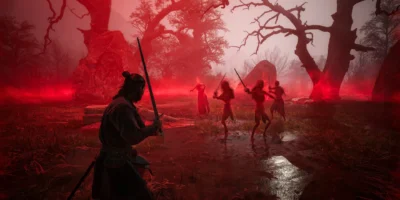
While I was afraid to dive into crowded groups in the game’s early stages, as I progressed I started fearlessly diving into the middle of them all, trusting the combos and moves I could pull off. When you unlock perfect parry, time-slowing and crowd-control spells in the later stages of the skill tree, battles turn into one huge chaos.
The game does not show its hand early when it comes to abilities. You acquire the truly powerful spells only after spending a very long time in the game. Normally in games like this, once you pass twenty hours you will have seen most of the mechanics. But in Crimson Desert, even if you spend hundreds of hours, you feel that something is still missing. How correct a choice this is in terms of game design is debatable. While some players prefer to learn everything at the start and spend the rest experiencing the events unfolding in the world and discovering the story, others may want to constantly see new mechanics and try new things. So, if you can settle clearly in your own mind what you expect from the game, whether or not you will enjoy it will become clear accordingly.
On the other hand, the interactive, physics-based structure of the world is also perfectly reflected in the battles. You can shoot down a wooden watchtower the enemies are standing on and collapse it, set the dry grass around them on fire and instantly turn enemy camps into hell, or use a massive tree as a slingshot with your Abyss power and hurl yourself onto the enemies. This creative freedom actually lets you make the simple quest structures I complained about above fun through experiences you create yourself. The development team deserves credit on this front. In fact, in the game’s first weeks, players managed to send Kliff flying with an upgraded force palm ability, allowing Kliff to climb tall mountains with ease. The development team added this as a mechanic and allowed this community-discovered feature to be used.
Even though I have praised it this much, the combat system is not without serious problems. For example, the difficulty curve unfortunately never works in a perfectly balanced way. While you wipe out the bandit groups you run into on horseback in the open world within seconds, putting on a show, in story quests or some dungeon boss battles the game suddenly changes concept and drags you into a punishing soulslike difficulty.
Actually, it is nice that the game has these kinds of challenges, but when there is inconsistency between difficulties it can sometimes stand out. There are more than 70 bosses in the game. These bosses’ designs are visually magnificent. I can say the bosses’ difficulty balance is well struck too. Some are genuinely hard, some are too easy. Because I love soulslike games very much, battling tough bosses was enjoyable, even if it was sometimes frustrating.
There is serious imbalance in the puzzles as much as in the combat system. The game has truly creative platforming and logic puzzles that require you to interact cleverly with the environment’s physics and the Abyss abilities you have acquired. But in some of them, the game asks something so specific and illogical of you that you find yourself helplessly searching for a solution on YouTube. Also, because of the clunkiness of the character’s animation mechanics, solving some puzzles can be genuinely nerve-wracking.

Technical Achievement
From a technical standpoint, Crimson Desert is definitely one of the best-looking and most hardware-demanding games of this generation. We all know the infamous stuttering and optimization problems Unreal Engine 5 has created in the industry. Pearl Abyss‘s in-house BlackSpace Engine comes like a remedy at a time when the industry is going through such troubles. Although I personally played the game mostly on PlayStation 5, I also had the chance to experience it on PC. Played with HDR on and in performance mode, the game ran smoothly and fluidly even on such a massive map with a long draw distance, with this many effects and dozens of NPCs on screen.
We know that in its launch week the game had various optimization issues on PC and the base PlayStation 5. Because of this, player reviews on Steam were even mixed. But the company took incredibly fast action, bringing major updates almost every day within a week and immediately fixing nearly everything players complained about. Pearl Abyss supports a single-player production relentlessly and aggressively, as if the game were still an MMO or live-service game. The scarcity of fast travel points — the most complained-about issue — was addressed, the complicated inventory-management interface was made easier, hints were added to some incomprehensible puzzles, and a boss rush mode was even introduced.
It is a rare situation in the industry for player community feedback to be taken into account this quickly right after a single player game’s release, and for such radical improvements to be made to the game’s core mechanics and structures (detailing the difficulty settings and overhauling the stamina system). This approach is incredibly promising for the game’s long-term future. Those who bought the game and still have not started will probably be playing a very different game from its initial state when they begin around the fall. The game is already quite refined, balanced and in good shape right now. As players, of course we are happy to see action taken this way on the flaws everyone complained about.

The Invisible Elements of Atmosphere
The element that makes such a large world believable — and is at least as important as the other mechanics and systems — is sound design. I try to pay much more attention to the sound design and music in games than the average player does. A game having beautiful music and well-designed sounds can immediately change my view of it.
Sound design and music are some of the most important complementary elements of this enormous world. The clash of swords, the explosions and the punch sounds in fights are incredibly satisfying and savage. And because it has a living world, the sounds of nature are quite important too. The rustling of leaves, distant wolf howls and the howling of the wind can easily pull you into the world of Pywel the moment you put your headphones on.
The character cinematics are of course not at the level of a The Last of Us or Red Dead Redemption 2. Personally, I think Western studios do a better job on the cinematic-narrative side. But I can say Crimson Desert is better than you would expect from a game of this scale. First of all, it is clear the voice acting was prepared by a professional cast. Despite the bland, shallow writing of the main character Kliff, his voice actor still tried to lend the character some weight.
On the other hand, even though it was prepared by a professional team, I could not quite fit the voice tones to some characters, Kliff foremost among them. On the music front, the orchestral tones have a wonderful dynamic. While soothing and mystical tones are offered as you ride your horse across boundless meadows or glide over the map, more epic and adrenaline-pumping music is used in tough boss battles or during clashes with an enemy group.

A Flawed but Mesmerizing Masterpiece
Crimson Desert is a game full of contradictions that is quite hard to define in a single sentence or to recommend blindly to every type of player. If you are looking for a story-focused, fast-paced adventure with very strong cinematic narration, a clear beginning and end, and an emotional bond you can form — like God of War or The Last of Us — Crimson Desert will most likely disappoint you.
Weak character development and that suffocating pile of detail can completely detach players expecting a more linear flow from the game within the first 20 hours. And the game definitely does not deserve to be played for just 20 hours, because you would miss more than half of the content. But if you say, “Give me a massive, living world and I will write my own story and lose myself in it,” then Crimson Desert will be a magnificent masterpiece you will not be able to put down for months — perhaps, depending on future updates, for years — and in which you will discover something new every time you dive in.
Pearl Abyss has managed to bring forth, from the ashes of a cancelled and risky MMO, a magnificent production that pushes the boundaries of the single-player open-world genre to the limit. This is without a doubt one of the biggest, fullest and most beautiful open-world games I have experienced. Crimson Desert more than makes up for the obvious shortcomings in its storytelling with its unique sense of exploration and unparalleled micro-world detail.
The development team’s incredible support for the game also makes it far more trustworthy. Of course it has its flaws and mistakes; I already tried to touch on them above. But the massive vision presented and the sense of pure adventure and freedom are so strong that it deserves to go down in history as one of the boldest and most magnificent productions the gaming world has seen in recent years. Every player who wants to enjoy the taste of limitless freedom, chaos and exploration needs to step onto the continent of Pywel and experience this game.
Click here to read the other articles by Poyraz Akyol.
For more, you can follow us on YouTube, Twitter and Instagram.







Yorumlar