
 Yazar
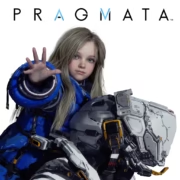
Pragmata (PS5)
Her şeyin aynılaştığı ve durmadan tekrarlandığı günümüz endüstrisinde taze bir nefes olan Pragmata, aynı anda hem tanıdık hem de yeni hissettiren bir oyun. İnovatif oynanışı, aksamayan temposu, oyuncuyu sürekli zinde tutan döngüsü ve sevilesi karakterleri ile Capcom'un nur topu gibi bir marka yarattığını söylemek mümkün.
In today’s gaming industry, where development costs rise with each passing day, established companies have come to rely increasingly on their older franchises. Resurrecting an already proven series or putting it back on the market in new editions has become a safer investment than ever. Consequently, for these companies, new mechanics have started to feel frightening, let alone new franchises. The formula was already working, and as the player base continued to grow, there was no reason to abandon that safe ground.
In such an atmosphere, Capcom — which had recaptured its former glory with Resident Evil and was multiplying its profits over and over — made a move no one expected. For a studio that had reintroduced the remake trend into wide circulation to be working on a new IP was a bold decision that no one saw coming. Pragmata in question had been drawing attention ever since it was announced at a PS5 event in June 2020. The game, centered on an astronaut and a robot with the appearance of a small girl, promised us both a completely fresh world and a next-generation experience.
Yet the technological frontier that Pragmata promised upon its announcement has long since been surpassed. Even other Capcom games had achieved extraordinary visuals and performance levels reaching 120 FPS on different PS5 models. Given this, the game’s greatest trump card became its much-praised innovative gameplay. For the young team directed by Cho Yong-hee and Yasuhiro Anpo had developed an exceptionally innovative gameplay combining action and puzzle elements. All eyes turned to April 17, when we would see whether the game still had a contemporary feel. Using the code provided to us by Capcom, I immediately got ahead of the curve and experienced this new franchise — which can be described as “an oasis in the desert” — firsthand.
An Innovative Gameplay
Pragmata is shaped around a 3D printing technology called lunafilament, thanks to which almost anything desired can be produced within seconds. The base built on the Moon by Delphi Corporation to extract this material loses its entire crew one day following a mysterious malfunction. It doesn’t take long for Hugh — who arrives as part of the support team sent to investigate — to suffer the same fate and come under attack by an artificial intelligence system targeting humans. Hugh, who loses his friends in this attack, is rescued by D-I-0336-7, an android of the model called Pragmata.
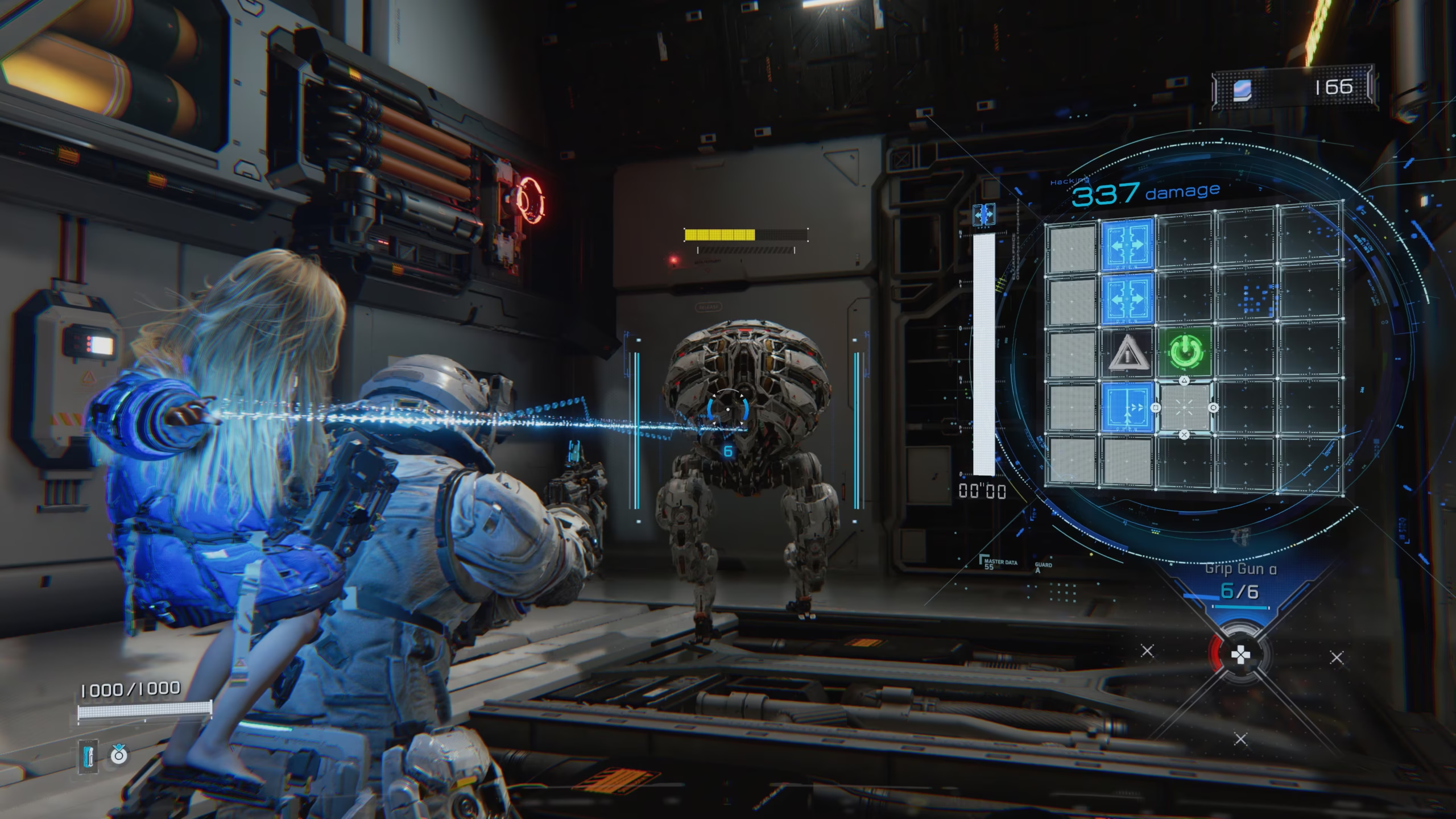
After recovering from the shock he has experienced (and dealing with a few machines that have gone haywire), the first thing Hugh does is give this robot, who appears to be a little girl, a proper name: Diana. This duo has many reasons not to become separated from each other — not least the fact that they are the only levelheaded people on the space station, but also the fact that they need each other to survive. Because due to extreme security measures, every robot inside the station has a shield that cannot be overcome by brute force, and there is no one but Diana who can hack them. Hugh, meanwhile, takes on the primary offensive role with a variety of weapons once the shields are brought down.
Pragmata allows us to control these two characters — who have entirely different roles — within a single action system. First we bring down the robots’ shields with Diana, then we let the weapons do the talking with Hugh. The real factor that tests the player’s reflexes and wits simultaneously here is the requirement to control these two characters at the same time. Indeed, while trying to find the most effective or quickest path in the hacking mechanic — which functions like an accelerated puzzle sequence — depending on the situation, you are also evading attacks from robots and environmental obstacles while watching for the moment to strike.
This gameplay system might sound like little more than a gimmick at first. However, the development team has genuinely done everything possible to keep this system alive. Different enemy types, platforming elements, weapon types, hack skills, ability upgrades… What undoubtedly defines Pragmata most importantly is that it offers a remarkably innovative gameplay that engages both left and right brain simultaneously. I am certain that in the years ahead — much like the Arkham combat system, which is now frequently imitated — we will see this action-and-puzzle-hybrid gameplay style in different productions. The only thing I wished for is that this system had been used in a greater number of cinematic sequences alongside scenarios like environmental puzzles and enemy attacks. However, this certainly does not cast a great shadow over the variety of gameplay the game offers.
Getting Lost in the Flow
On the other hand, perhaps one of the game’s most admirable aspects is its masterfully calibrated pacing. We have seen many times that games in which we continuously upgrade our abilities around a specific mechanic at some point deliver an uneven flow and become tedious. However, Pragmata both constantly refreshes its mechanics with an excellent learning curve and leaves ample space for us to master them.
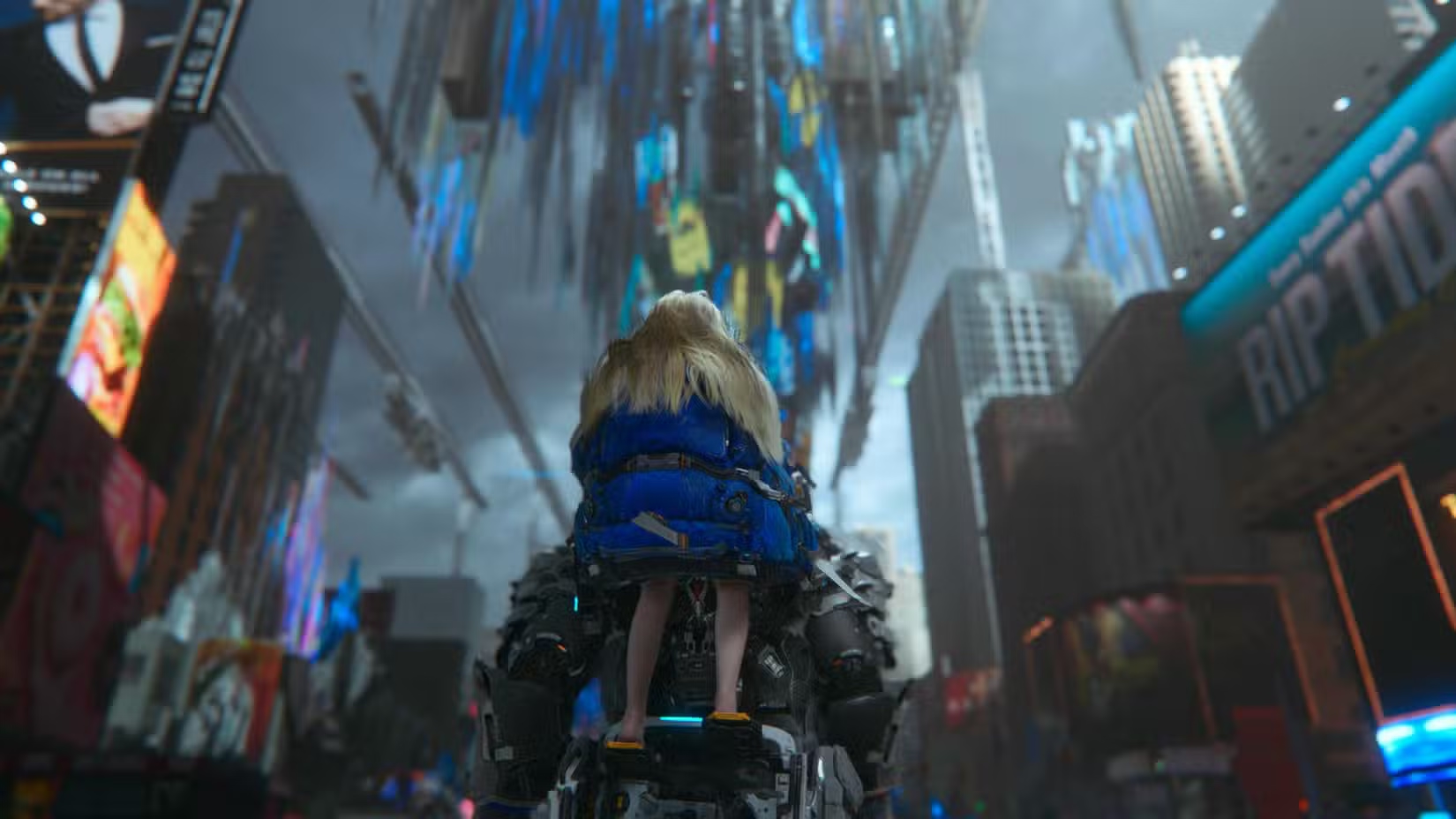
While the gameplay loop is this satisfying, the level design also deserves mention. To be honest, in Pragmata we are largely wandering through sterile corridors and soulless laboratories. However, there are also more interesting areas to visit, such as a Times Square and a synthetic forest, both constructed entirely through 3D printing. The fake Times Square in particular — which captivates with its aesthetics — actually offers a genuinely rich and expansive map when viewed as a semi-open world.
Still, Pragmata sometimes repeats mistakes that many of its peers have made when it comes to level design. First of all, the combat arenas in the game are largely designed like corridors that lock when entered. While these areas do grant the player freedom to fight on vertical and horizontal planes, they typically have a design that restricts the character’s range of movement. This can be a bit frustrating at times when you consider that the platforming mechanics are not as polished as the action system. Sections that are not particularly bothersome in the first half of the game can kill the excitement in the second half — because the interesting sequences added consist of moving elevators and platforms with enemy spawns, which we have seen many times before.
Despite all these shortcomings, if there is one thing the levels genuinely excel at, it must be “exploration freedom.” Pragmata is one of the AAA games that most encourages exploration in recent years. There is a richly detailed and carefully crafted map design in which you are always rewarded when your curiosity leads you to investigate your surroundings. Some players might complain about the need to periodically return to shelter to replenish health and spend upgrade points; however, I can say that this does not disrupt the exploration process or the pacing. Although I initially approached this “interrupted” flow with suspicion, I later came to see it as precisely the opposite — a design example that manages exploration and progression in parallel.
Longing for Earth and Human Bonds
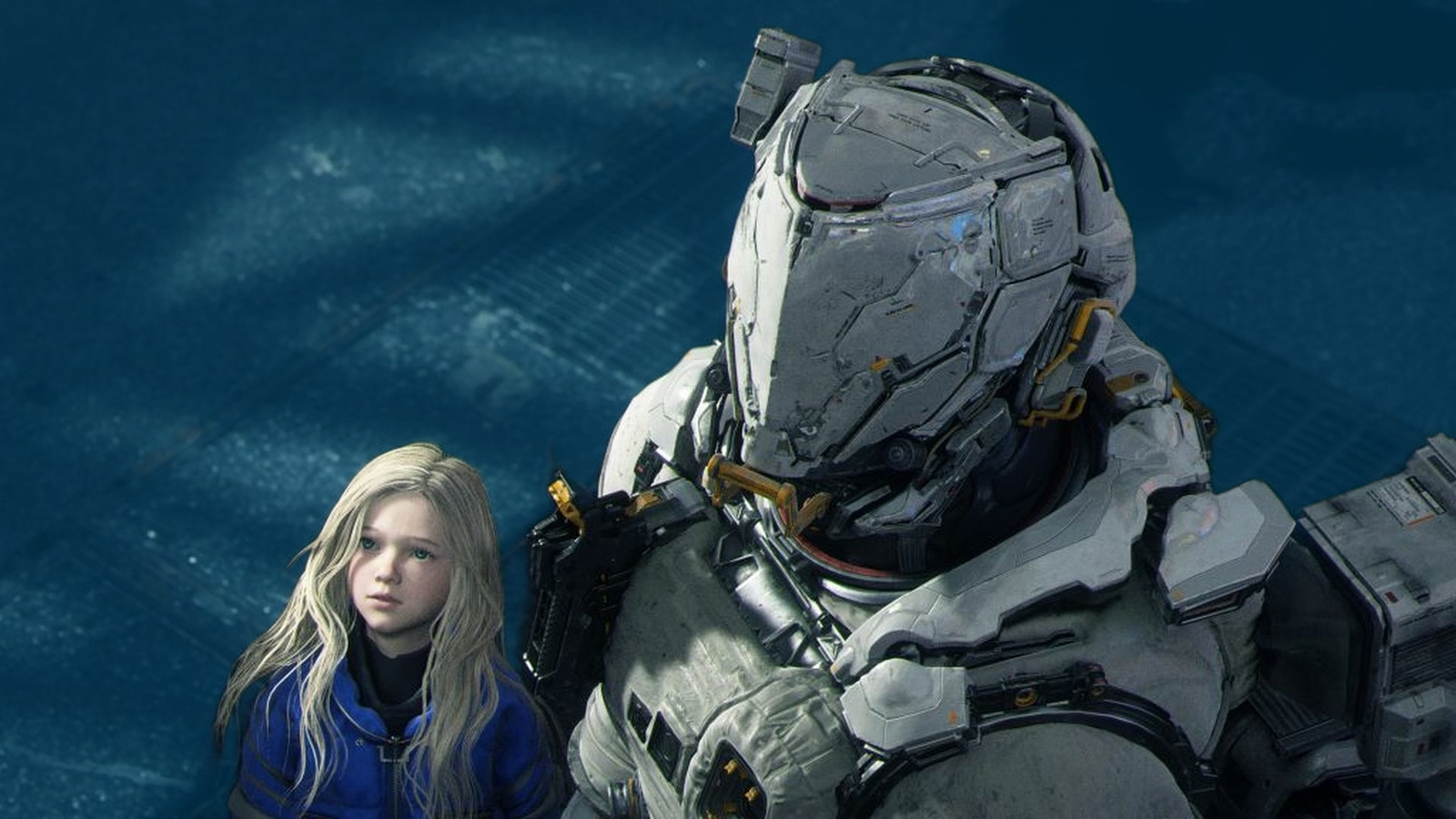
Pragmata is a game in which nearly everything is in harmony. It is possible to see this fine line of communication in the storytelling as well. Throughout the game, we witness the companionship between Hugh and Diana evolve into something almost resembling a father-daughter relationship. We can even contribute to this as players at times — not through dialogue options, but by making Diana happy with collectible gifts. The greatest source of this communication is the fact that on a ship where the attempt is to simulate Earth, not a single sign of life remains. While the surroundings are filled with hologram recordings full of quarrels and resentments and models with deformed filaments, the dramatic framework rests on the fact that Hugh is a human who has set foot on Earth and Diana is a curious child who knows nothing of any of it.
In truth, the game cannot be said to have an original story — it is even a story whose like we have seen many times before. Still, the screenplay’s inclination toward bonding moments that allow the characters to connect with each other, rather than a straightforward plot, covers some of the shortcomings here. Observation points scattered throughout the map — through areas like holographic zoos and coastlines — allow the duo to get to know each other through Earth; one of them longs for it, the other has never seen it. As with most space-themed narratives, Earth is depicted here through “romantic nature scenes” and “fragile human bonds”; but this narrative choice at least enables the story to escape soullessness and carry a quality of “human ordinariness.”
Pragmata, a breath of fresh air in today’s industry where everything has become homogenized and endlessly repetitive, is a game that feels simultaneously familiar and new. With its innovative gameplay, smooth pacing, a loop that keeps the player perpetually engaged, and loveable characters, it is fair to say that Capcom has created a shining new franchise. Despite shortcomings like level design and screenplay writing, where some creativity has been lost, I can foresee this becoming a breakthrough that will make itself talked about for many years to come. Here’s hoping we see the same courage from other companies one day!
To read more articles by Tunahan İbiş, click here.
Follow us on Youtube, X, and Instagram for more.





Yorumlar